Remote Mining Operations
with Private 5G
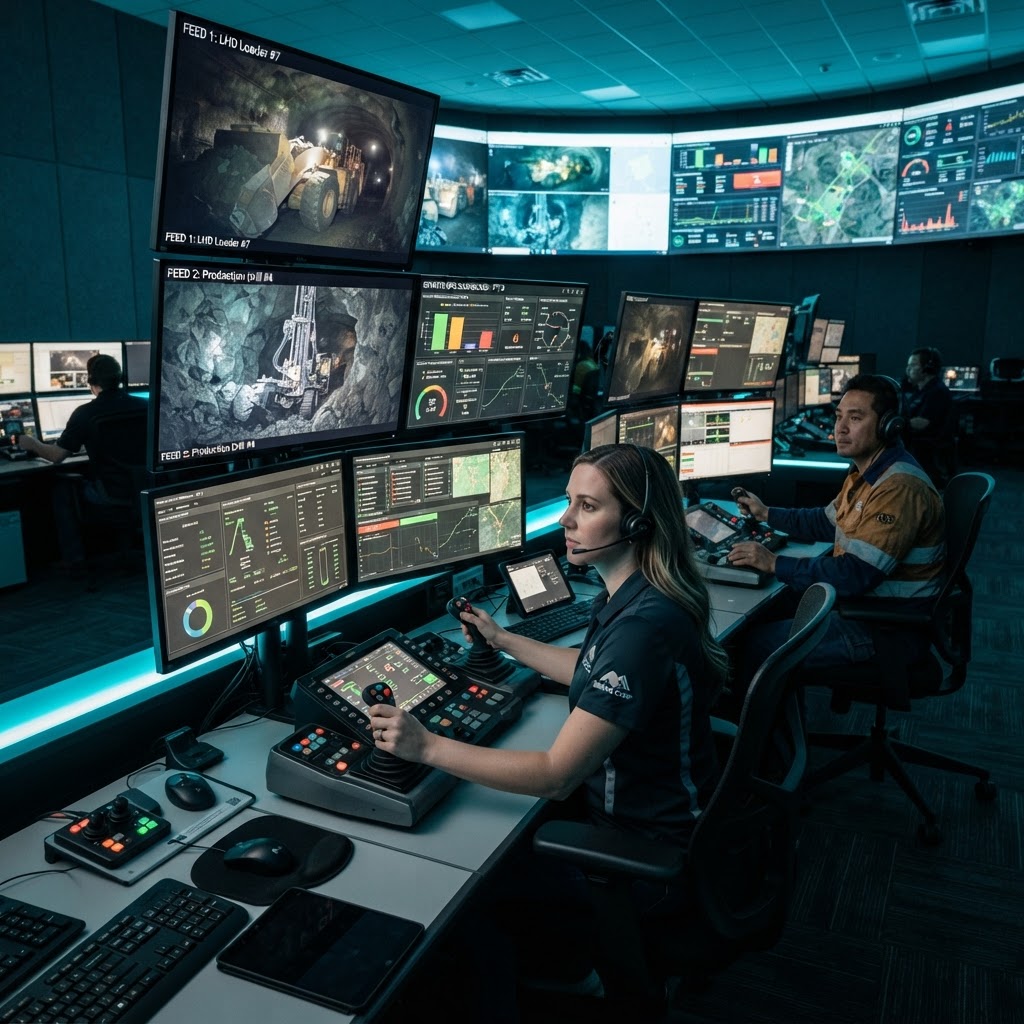
Control drilling, blasting, and haulage equipment from safe remote operations centers, eliminating workers from hazardous underground and blast zones.
Why Now
Safety Imperative
Mining injury rate 3x average; fatalities costing $4M+ each
Recruitment Crisis
Cannot attract workers to remote, dangerous underground environments
Productivity Gap
Shift changes and travel time reduce equipment utilization to 60%
Proven Technology
Rio Tinto, Sandvik demonstrating 30-40% productivity gains with remote
Regulatory Pressure
Mining authorities encouraging elimination of workers from hazard zones
Insurance Demands
Insurers requiring remote operations for coverage renewal
The Operational Challenge
Traditional mining operations expose workers to life-threatening hazards in underground environments and blast zones.
Worker Safety Risks
Personnel exposed to rockfalls, equipment strikes, blast zones, toxic gases underground
High Injury Rates
Mining industry injury rate 3x higher than average, with fatalities costing $4M+ each
Recruitment Challenges
Difficult to attract skilled workers to remote, dangerous underground environments
Limited Productivity
Shift changes, safety protocols, travel time reduce equipment utilization to 60%
Environmental Exposure
Extreme heat, dust, noise exposure leads to long-term health issues
Training Complexity
6-12 months to train operators on heavy equipment in hazardous conditions
The Private 5G Enabled Solution
Remote Control Centers
Operators control equipment from air-conditioned surface facilities hundreds of meters away
Real-Time Video
Multiple HD camera feeds with <20ms latency for precise equipment control
Haptic Feedback
Force feedback controls provide operators tactile sensation of equipment operation
Zero Worker Exposure
Eliminate personnel from blast zones, underground hazards, and extreme environments
24/7 Operations
Continuous equipment operation without shift changes or underground travel time
Multi-Machine Control
Single operator can monitor and control multiple pieces of equipment simultaneously
Technical Architecture
Ultra-reliable low-latency connectivity for real-time remote equipment control.
Performance Specifications
URLLC Mode
Ultra-reliable low-latency communications mode ensures <20ms end-to-end latency for control
Multi-Camera Streaming
6-8 HD video streams per machine for 360° visibility and precise operation
Redundant Connectivity
Dual-path 5G with automatic failover ensures continuous operations
Edge Processing
Local video encoding and sensor data processing minimizes latency
Network Engineering Considerations
URLLC Mode
<20ms end-to-end latency for precise equipment control
Multi-Camera HD Streaming
6-8 HD video feeds per machine for 360° operator visibility
Haptic Feedback Integration
Force feedback controls provide tactile sensation of equipment operation
Redundant Connectivity
Dual-path 5G with automatic failover for continuous operations
Edge Video Encoding
Local processing minimizes latency for real-time control
Remote Operations Center
Surface facility hundreds of meters from hazard zones
Measurable Business Impact
Operational Impact
- 90% reduction in worker hazard exposure
- 35% increase in equipment utilization
- 24/7 continuous operations
- Zero fatalities in remote zones
Financial Impact
- $42M annual productivity gain
- 70% reduction in safety incidents
- $8M lower insurance premiums
- Eliminated fatality costs
Strategic Impact
- Attract skilled operators to safe surface roles
- Industry-leading safety reputation
- Foundation for full automation
- Competitive recruitment advantage
Deployment Model
Phased transition from manned to remote mining operations.
Infrastructure
Deploy 5G network underground, build remote operations center, fiber connectivity
Pilot Equipment
Retrofit 3-5 machines with cameras, sensors, remote control systems
Operator Training
Train operators on remote controls, validate latency and safety protocols
Fleet Conversion
Scale to entire equipment fleet with full remote operations capability
Sample ROI Snapshot
Financial analysis for underground mine with 25 pieces of heavy equipment
Current State
With Private 5G
3-Year Financial Projection
| Metric | Year 1 | Year 2 | Year 3 |
|---|---|---|---|
| Investment | ($18,000,000) | — | — |
| Annual Benefit | $42,000,000 | $48,000,000 | $52,000,000 |
| Net Benefit | $24,000,000 | $48,000,000 | $52,000,000 |
| Cumulative | $24,000,000 | $72,000,000 | $124,000,000 |