Precision Agriculture
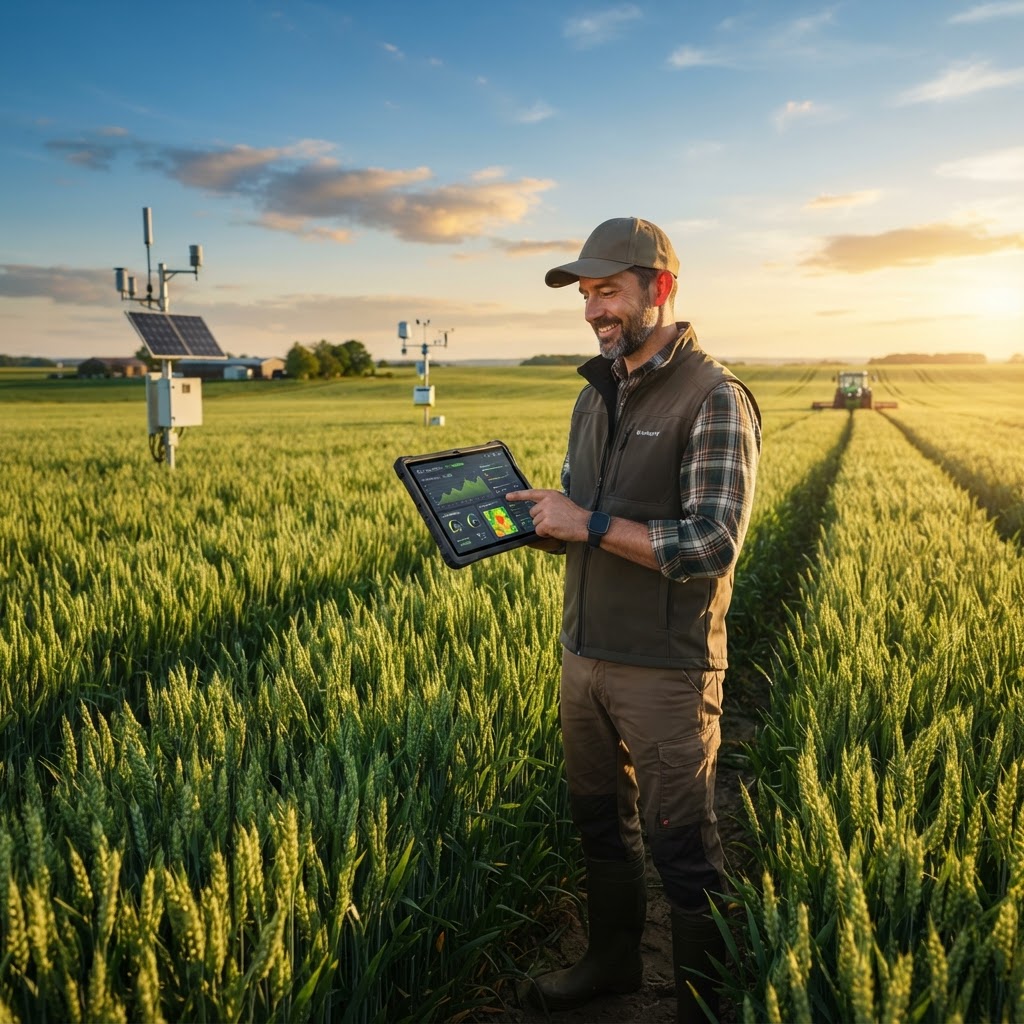
IoT-Enabled Crop & Soil Intelligence
Why Now
Global Food Demand
Population growth requires 70% more food by 2050; yield optimization critical
Climate Variability
Unpredictable weather demands real-time adaptive farming decisions
Input Cost Inflation
Fertilizer, pesticide, and fuel costs rising 15-20% annually
Labor Shortage
Agricultural workforce declining; automation essential for scale
Sustainability Mandates
Regulators requiring documented reduction in chemical and water usage
Technology Maturity
IoT sensors, satellite imaging, and AI analytics now affordable at farm scale
The Operational Challenge
Limited Crop Visibility
No real-time data on crop health, soil conditions, or growth stages across vast acreage
Reactive Decision-Making
Farmers apply inputs on fixed schedules regardless of actual field conditions
Input Waste
Uniform application of fertilizer and chemicals wastes 30-40% on areas that do not need it
Yield Variability
Soil and microclimate variations cause 20-30% yield differences within same fields
Weather Dependence
Cannot adapt operations in real-time to changing weather and moisture conditions
Data Silos
Soil tests, weather data, and yield maps trapped in separate systems without integration
The Private 5G Enabled Solution
Soil IoT Sensors
Continuous monitoring of moisture, temperature, pH, and nutrient levels across every field zone
Satellite & Drone Imaging
Multispectral crop health imaging identifies stress zones before visible symptoms appear
Variable Rate Application
Precision application of fertilizer, seed, and chemicals based on zone-specific needs
Yield Mapping
GPS-tagged yield data creates prescription maps for each field section
AI Crop Analytics
Machine learning predicts optimal planting, irrigation, and harvest timing
Weather Integration
Real-time weather data feeds automated irrigation and spray decisions