IoT-Enabled Patient Monitoring
with Private 5G
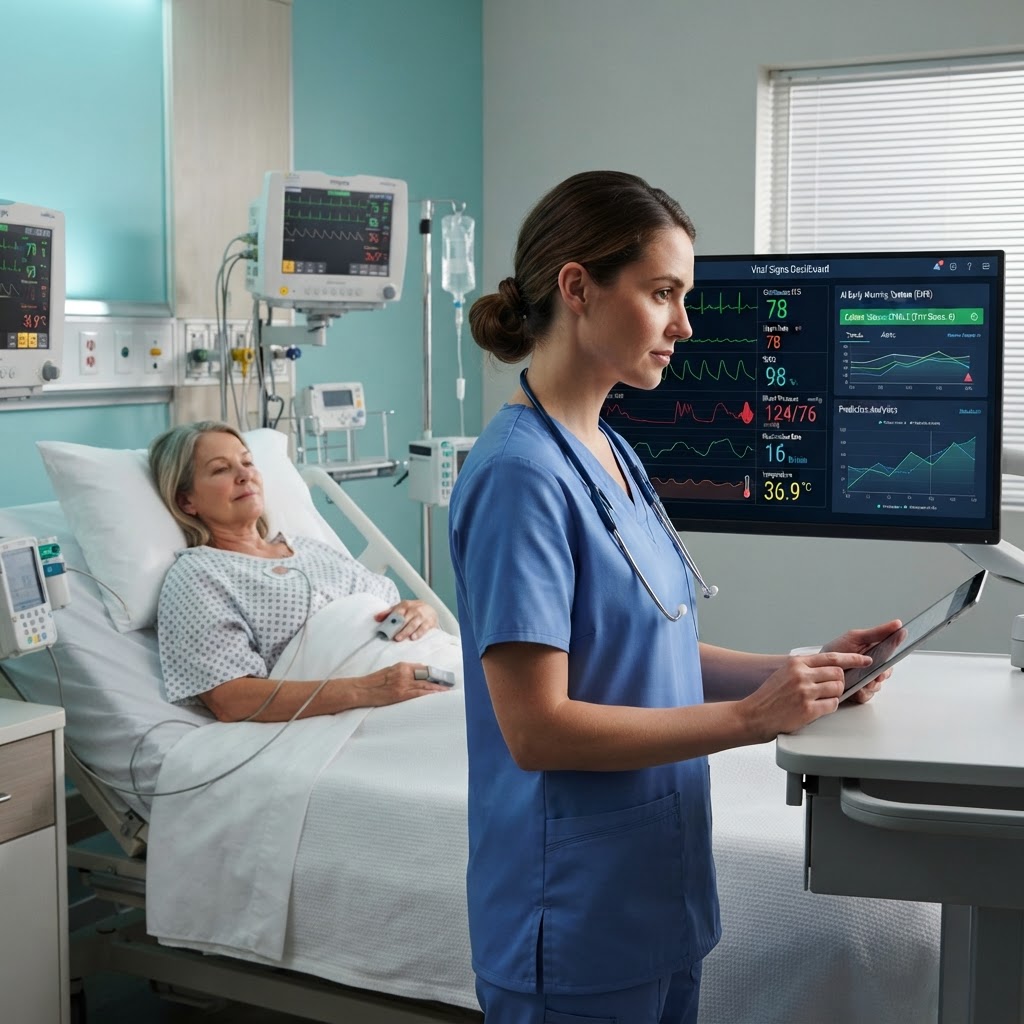
Enable continuous wireless monitoring of patient vitals with instant alerts and AI-powered early warning systems.
Why Now
Patient Safety Crisis
Preventable adverse events cost hospitals $28M+ annually
Readmission Penalties
Hospital readmissions within 30 days cost Medicare billions in penalties
Labor Shortage
Nursing shortage makes manual monitoring operationally infeasible
Early Detection Demand
Sepsis and cardiac events require detection within hours, not days
Remote Care Shift
Post-discharge monitoring essential to prevent readmissions
Data Integration Gap
EHR systems disconnected from real-time patient monitoring
The Operational Challenge
Wired Monitor Limitations
Tethered patients cannot mobilize, extending hospital stays
Limited Monitoring Capacity
Insufficient telemetry beds force lower-acuity patients to general floors
Delayed Deterioration Detection
Hourly vitals checks miss early warning signs between measurements
High Nurse Workload
Nurses spend 30% of time on manual vitals documentation
Adverse Events
Preventable complications occur when patient deterioration not detected early
High Readmission Rates
Patients discharged without home monitoring readmit within 30 days
The Private 5G Enabled Solution
Wireless Telemetry
Patients wear wireless sensors that continuously stream vitals
AI Early Warning
Machine learning detects patient deterioration 6-8 hours earlier
Unlimited Mobility
Patients can walk, shower, use facilities while remaining monitored
Automatic EHR Integration
Vitals flow directly into patient records without manual entry
Central Monitoring
One nurse monitors 50+ patients from central station with AI filtering
Post-Discharge RPM
Continue monitoring at home after discharge to prevent readmissions
Technical Architecture
Performance Specifications
Continuous Monitoring
ECG, SpO2, blood pressure, temperature, respiration streamed every second
ML Early Warning
Predictive algorithms identify sepsis, cardiac events, respiratory failure early
Alarm Intelligence
AI reduces false alarms by 90% while improving true positive detection
Trend Analysis
Identify deterioration trends invisible in spot checks
Network Engineering Considerations
Ultra-Low Latency Paths
<1 second sensor to platform to EHR integration for real-time alerts
High-Frequency Data Streams
Continuous ECG waveforms and multi-parameter vitals demand high bandwidth
Edge Processing Architecture
MEC nodes running ML models to detect anomalies without cloud round-trips
Massive Device Density
1000+ concurrent patients with sensors and devices per hospital
Deterministic Performance
Alert guarantees (no jitter) critical for patient safety notifications
Seamless Mobility
Patient movement across hospital floors without connection drops
Measurable Business Impact
Operational Impact
- 50% reduction in adverse events
- 6-8 hours earlier deterioration detection
- 1,000+ patients monitored wirelessly
- 90% reduction in false alarms
Financial Impact
- $28M avoided adverse event costs
- 30% reduction in length of stay
- 40% lower readmission rates
- Improved reimbursement capture
Strategic Impact
- Enhanced patient outcomes
- Increased bed capacity utilization
- Foundation for hospital-at-home
- Competitive quality advantage
Deployment Model
ICU Pilot
Deploy wireless monitoring in ICU for high-acuity validation
Step-Down Units
Extend to progressive care and telemetry floors
Hospital-Wide
Scale to all inpatient units with AI early warning deployment
Home Monitoring
Enable remote patient monitoring for post-discharge patients
Sample ROI Snapshot
Financial analysis for 550-bed hospital
Current State
With Private 5G
3-Year Financial Projection
| Metric | Year 1 | Year 2 | Year 3 |
|---|---|---|---|
| Investment | ($8,000,000) | — | — |
| Annual Benefit | $28,000,000 | $35,000,000 | $40,000,000 |
| Net Benefit | $20,000,000 | $35,000,000 | $40,000,000 |
| Cumulative | $20,000,000 | $55,000,000 | $95,000,000 |