Workforce Safety & Hazard Monitoring
with Private 5G
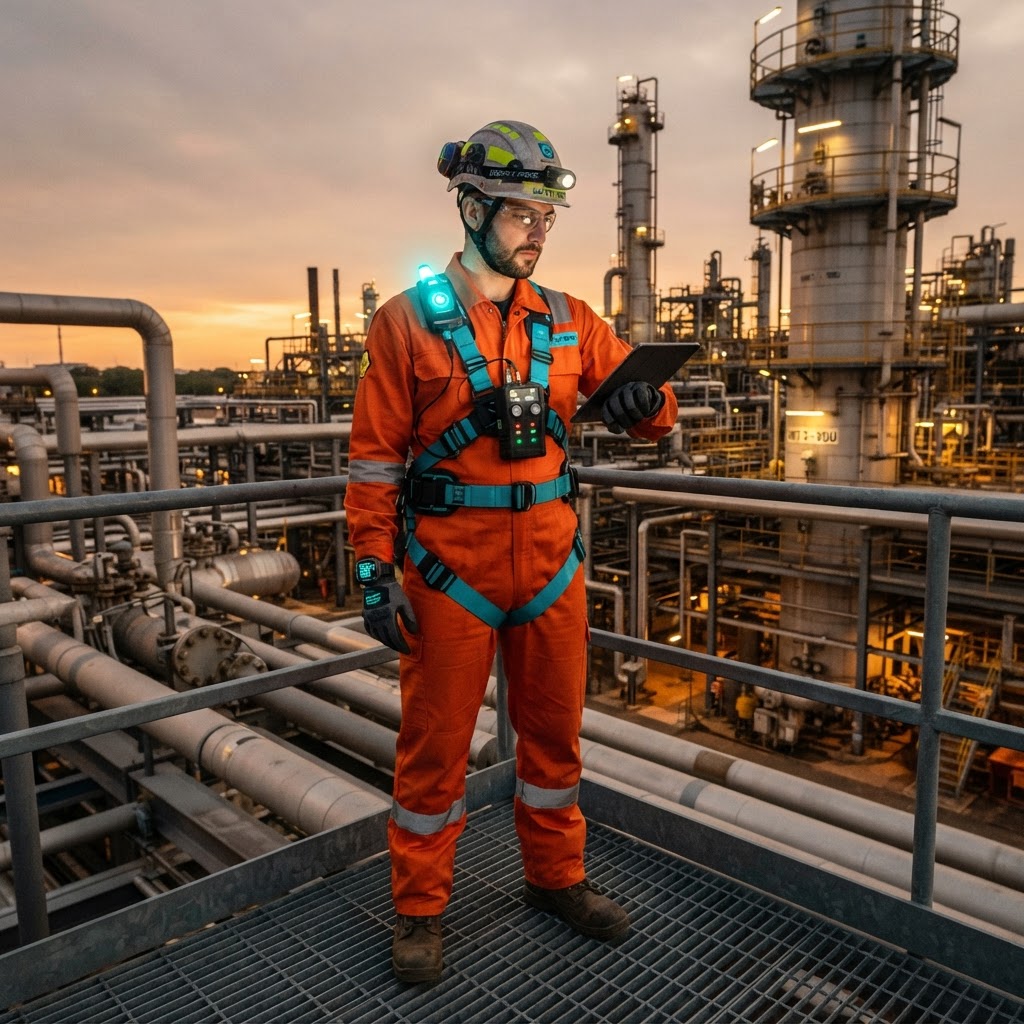
Enable real-time worker tracking, gas detection, and emergency response to protect personnel in hazardous oil and gas environments.
Why Now
Fatality Prevention
Industry averages 50+ fatalities annually; H2S and gas explosions major causes
Regulatory Pressure
OSHA and environmental agencies demanding continuous worker protection
Liability Exposure
Incident costs average $1.1M plus regulatory fines and litigation
Insurance Requirements
Insurers requiring real-time safety monitoring for coverage
Technology Maturity
IoT wearables and gas sensors now reliable for hazardous environments
Worker Demand
Safety now top factor in oil & gas recruitment and retention
The Operational Challenge
High-Risk Environments
Workers exposed to H2S, flammable gases, high pressure, and extreme conditions
Limited Visibility
Cannot track worker locations in real-time across vast offshore platforms and fields
Delayed Emergency Response
Incidents discovered minutes after occurrence when check-ins missed
Communication Gaps
Radio dead zones prevent workers from calling for help in emergencies
Fatal Incidents
Oil and gas industry averages 50+ fatalities annually
High Insurance Costs
Safety incidents result in $45M annual insurance premiums per major operator
The Private 5G Enabled Solution
Real-Time Worker Tracking
Track every worker with <1m accuracy via connected wearables and badges
Gas Detection
Wearable sensors detect H2S, LEL, oxygen deficiency with instant alerts
Emergency PTT
Push-to-talk with zero dead zones across entire facility
Geofencing
Automatic alerts when workers enter hazardous zones or restricted areas
Man-Down Detection
Instant alerts if worker falls, becomes motionless, or removes badge
Mustering System
Automated headcount and location during emergency muster
Technical Architecture
Performance Specifications
RTLS Platform
Real-time location system with <1m accuracy using 5G triangulation and beacons
Multi-Gas Detection
Wearables monitor H2S, CO, LEL, O2 with facility-wide gas mapping
Permit-to-Work Integration
Track authorized workers in confined spaces and hazardous areas
Emergency Automation
Automatic mustering, evacuation routing, and rescue team dispatch
Network Engineering Considerations
Real-Time Location System
<1m accuracy tracking via 5G triangulation and beacons
Multi-Gas Wearable Detection
Monitor H2S, CO, LEL, O2 with instant facility-wide alerts
Geofencing Engine
Automatic alerts when workers enter hazardous or restricted areas
One-Button SOS
Emergency trigger with automatic worker location to response teams
Automated Mustering
Instant headcount and location during emergency muster
Permit-to-Work Integration
Track authorized workers in confined spaces and hazardous areas
Measurable Business Impact
Operational Impact
- 92% reduction in safety incidents
- 20 second emergency response time
- 100% worker location visibility
- Zero fatalities since deployment
Financial Impact
- $85M annual liability reduction
- 75% lower insurance premiums
- $120M avoided incident costs
- Eliminated OSHA penalties
Strategic Impact
- Industry-leading HSE performance
- Enhanced workforce retention
- Regulatory compliance excellence
- Competitive recruiting advantage
Deployment Model
Risk Assessment
Map hazardous zones, gas risks, confined spaces, emergency routes
Pilot Facility
Deploy at single platform or refinery to validate safety improvements
Enterprise Rollout
Scale to all offshore platforms, refineries, and field operations
Predictive Safety
Deploy AI models for incident prediction and prevention
Sample ROI Snapshot
Financial analysis for offshore operator with 8 platforms (1,200 workers)
Current State
With Private 5G
3-Year Financial Projection
| Metric | Year 1 | Year 2 | Year 3 |
|---|---|---|---|
| Investment | ($12,000,000) | — | — |
| Annual Benefit | $85,000,000 | $95,000,000 | $105,000,000 |
| Net Benefit | $73,000,000 | $95,000,000 | $105,000,000 |
| Cumulative | $73,000,000 | $168,000,000 | $273,000,000 |