Medical AR/VR Training
with Private 5G
Enable immersive surgical training, anatomy education, and emergency simulation without latency or quality degradation.
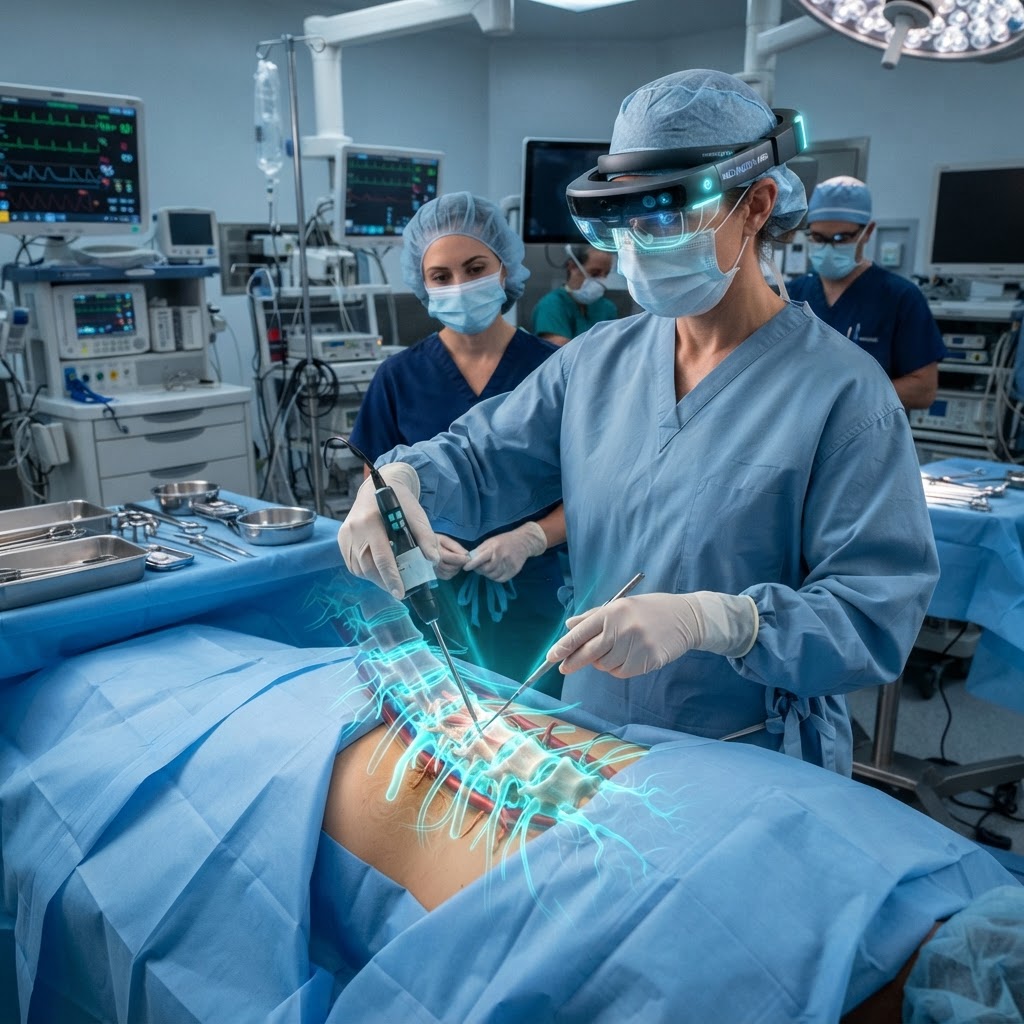
Why Medical Schools Are Adopting VR Training Now
Surgical Volume Decline
Reduced OR access post-pandemic creates training gaps for surgical residents
Cadaver Shortage
Body donation declining; VR enables unlimited practice opportunities
Patient Safety Standards
Accreditation bodies demanding documented competency before live surgery
Residency Recruiting
Top candidates prioritize programs with advanced simulation and training tech
Cost Pressures
VR amortizes training cost across hundreds of residents versus cadavers
Competency Measurement
Data-driven skill assessment enables objective progression tracking
The Operational Challenge
Limited Training Access
Surgical residents have limited OR time and cadaver access for practice
High Training Costs
Cadavers, simulation labs, and equipment cost $50K+ per resident annually
Patient Safety Risks
Learning on live patients creates unnecessary risk during skill development
Outdated Methods
Textbook and video-based learning lacks hands-on experience
Geographic Barriers
Cannot bring world-class instructors to all training sites
Skill Assessment Gaps
Subjective evaluation of clinical skills without quantitative metrics
The Private 5G Enabled Solution
Immersive VR Simulations
Practice complex procedures in realistic virtual environments repeatedly
3D Anatomy Learning
Interactive AR overlays for studying human anatomy and physiology
Zero-Latency Rendering
Edge computing delivers smooth VR experience without motion sickness
Multi-User Training
Collaborate with peers and instructors in shared virtual spaces
Skills Assessment
AI tracks performance metrics and provides instant feedback
Remote Proctoring
Expert instructors observe and guide from anywhere in real-time
Technical Architecture
Performance Specifications
Edge Rendering
Graphics processing at MEC delivers <20ms motion-to-photon latency for comfort
Haptic Feedback
Realistic touch and force feedback for surgical instrument training
Scenario Library
Comprehensive library of procedures, rare cases, and emergency situations
Performance Analytics
Track trainee progress with quantitative metrics and competency milestones
Network Engineering Considerations
Edge-Rendered Graphics
<20ms motion-to-photon via MEC for comfortable VR
Haptic Feedback
Realistic touch and force feedback for surgical instrument training
Multi-User Synchronization
Trainees and instructors in shared virtual environments
Scenario Library
Comprehensive procedures, rare cases, and emergency situations
Performance Analytics
Track trainee progress with quantitative metrics
Remote Proctoring
Expert instructors observe and guide from anywhere in real-time
Measurable Business Impact
Operational Impact
- 70% faster skill acquisition
- 85% knowledge retention vs traditional
- 5x more practice repetitions possible
- Zero risk to patients during training
Financial Impact
- $4M annual training cost reduction
- 60% lower simulation lab expenses
- 50% reduction in training time
- Eliminated cadaver procurement costs
Strategic Impact
- Attract top medical residents
- Industry-leading training program
- Scalable across multiple sites
- Enhanced clinical outcomes
Deployment Model
Content Development
Create VR procedures, anatomy modules, and emergency scenarios
Pilot Program
Deploy to one residency program to validate learning outcomes
Medical School Rollout
Scale to all training programs with curriculum integration
CME & Certification
Expand to continuing medical education and recertification programs
Sample ROI Snapshot
Financial analysis for teaching hospital with 150 residents
Current State
With Private 5G
3-Year Financial Projection
| Metric | Year 1 | Year 2 | Year 3 |
|---|---|---|---|
| Investment | ($3,500,000) | — | — |
| Annual Benefit | $4,000,000 | $5,000,000 | $6,000,000 |
| Net Benefit | $500,000 | $5,000,000 | $6,000,000 |
| Cumulative | $500,000 | $5,500,000 | $11,500,000 |