IoT Environmental & Gas Detection
with Private 5G
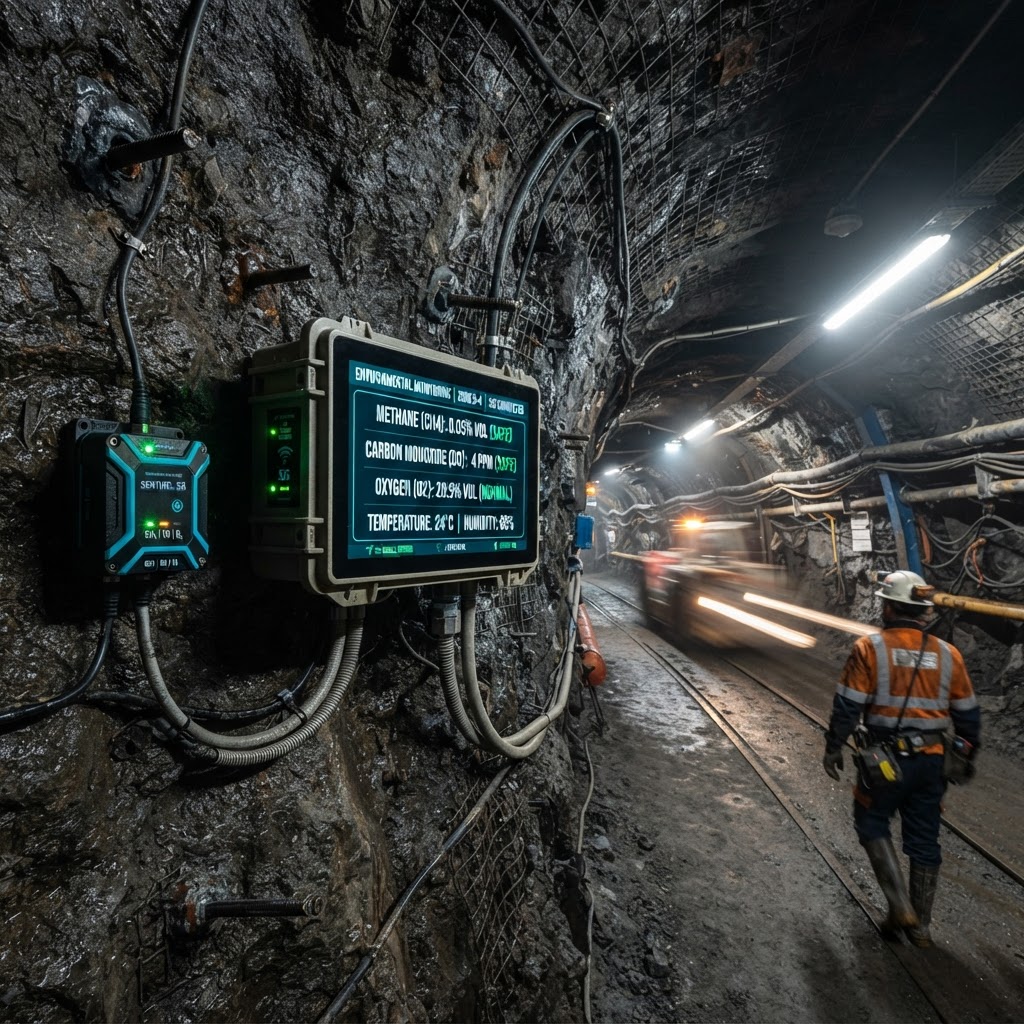
Real-time monitoring of methane, CO, oxygen levels, temperature, humidity, and ventilation to protect underground workers.
Why Now
Fatality Prevention
Gas explosions and oxygen depletion cause 40% of mining fatalities
Regulatory Mandates
MSHA requiring continuous atmospheric monitoring in underground mines
Manual Gap
Handheld detectors provide spot checks only; miss hazard buildups
Technology Maturity
IoT gas sensors now reliable and affordable for continuous deployment
Liability Exposure
Gas incident penalties average $1.2M plus shutdown costs
Worker Demand
Safety now top recruitment factor; mines compete on protection
The Operational Challenge
Underground mining environments pose life-threatening atmospheric hazards requiring continuous monitoring.
Toxic Gas Buildup
Methane, CO, hydrogen sulfide accumulation in underground areas causes explosions and fatalities
Insufficient Monitoring
Handheld gas detectors provide only spot checks, missing dangerous buildup between readings
Ventilation Failures
Inadequate airflow monitoring leads to oxygen depletion and gas accumulation
Worker Exposure
Workers enter hazardous zones without real-time awareness of atmospheric conditions
Delayed Alerts
Manual gas readings result in 30-60 minute delays before hazards are identified
Compliance Gaps
Incomplete atmospheric monitoring creates regulatory violations and fines
The Private 5G Enabled Solution
Gas Sensors
Continuous monitoring of CH4, CO, H2S, O2 at 100+ underground locations
Environmental Sensors
Temperature, humidity, pressure, airflow velocity tracking
Instant Alerts
<5 second warnings when gas levels exceed safe thresholds
Ventilation Control
Automated fan speed adjustment based on real-time gas readings
Worker Wearables
Personal gas detectors alert workers to local hazards
Predictive Analytics
AI forecasts gas accumulation patterns to prevent buildups
Technical Architecture
Comprehensive IoT sensor network with real-time atmospheric monitoring.
Performance Specifications
Dense Sensor Network
500+ sensors across all underground tunnels, stopes, and work areas
Real-Time Streaming
Sensor data transmitted every 5 seconds via 5G for instant hazard detection
Automated Responses
System automatically activates ventilation, cuts power, evacuates zones on gas alerts
Historical Analytics
Machine learning identifies gas accumulation patterns and predicts future risks
Network Engineering Considerations
Dense Sensor Network
500+ sensors across all underground tunnels, stopes, and work areas
Real-Time Streaming
Sensor data transmitted every 5 seconds via 5G for instant hazard detection
Automated Ventilation Control
System adjusts fan speed based on real-time gas readings
Worker Wearable Integration
Personal gas detectors alert workers to local hazards via 5G
Predictive Analytics
AI forecasts gas accumulation patterns to prevent buildups
Automated Emergency Response
System triggers evacuation, cuts power, activates ventilation on alerts
Measurable Business Impact
Operational Impact
- 95% reduction in gas-related incidents
- 100% continuous atmospheric monitoring
- <5 second hazard detection and alert
- Zero gas-related fatalities
Financial Impact
- $18M annual incident cost avoidance
- 60% lower ventilation energy costs
- $4M eliminated downtime from evacuations
- Reduced insurance premiums
Strategic Impact
- Industry-leading safety standards
- Enhanced regulatory compliance
- Improved worker recruitment
- Competitive operational advantage
Deployment Model
Systematic rollout of environmental monitoring across underground operations.
Coverage Design
Map all underground areas, determine sensor placement, deploy 5G infrastructure
Critical Zones
Install sensors in high-risk areas first - active faces, blasting zones, confined spaces
Full Coverage
Extend to all underground tunnels, stopes, and work areas with complete monitoring
Predictive System
Deploy AI models for pattern recognition and proactive hazard prevention
Sample ROI Snapshot
Financial analysis for underground mine with 800 workers
Current State
With Private 5G
3-Year Financial Projection
| Metric | Year 1 | Year 2 | Year 3 |
|---|---|---|---|
| Investment | ($8,000,000) | — | — |
| Annual Benefit | $22,000,000 | $25,000,000 | $28,000,000 |
| Net Benefit | $14,000,000 | $25,000,000 | $28,000,000 |
| Cumulative | $14,000,000 | $39,000,000 | $67,000,000 |