Farm Traceability & Supply Chain
Source-to-Shelf Tracking & Transparency
Why Now
Food Safety Regulations
FSMA and equivalent regulations require end-to-end supply chain traceability
Consumer Transparency
Consumers demand provenance, organic certification, and welfare documentation
Recall Costs
Average food recall costs $10M+; fast traceability reduces scope and cost
Cold Chain Compliance
Temperature monitoring mandatory for dairy, meat, and produce supply chains
Export Requirements
International markets require digital traceability documentation for agricultural imports
Blockchain Maturity
Distributed ledger technology now production-ready for agricultural supply chains
The Operational Challenge
Limited Traceability
Cannot trace produce from farm to shelf; recalls require broad, costly scope
Manual Records
Paper-based documentation is error-prone and impossible to query in real-time
Cold Chain Gaps
Temperature breaches in transit undetected, causing spoilage and safety risks
Recall Costs
Without precise traceability, recalls cover entire production batches at $10M+ each
Compliance Burden
Manual documentation for FSMA, organic, and export compliance consumes resources
Quality Disputes
Cannot prove handling conditions when quality disputes arise with buyers
The Private 5G Enabled Solution
IoT Cold Chain Sensors
Continuous temperature monitoring from harvest through retail delivery
Blockchain Tracking
Immutable ledger records every touchpoint from farm to consumer
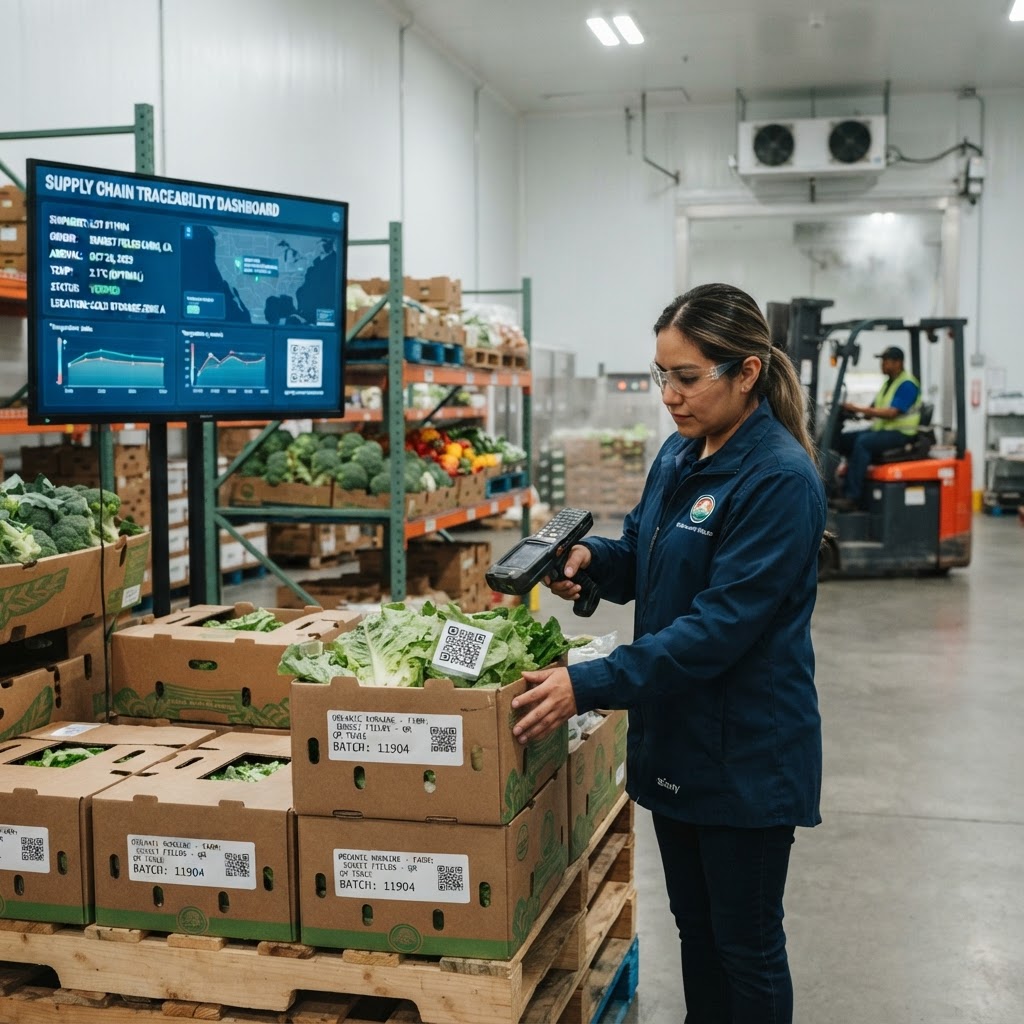
QR Code Tracing
Consumers and inspectors scan QR codes for complete product provenance
Real-Time Quality Monitoring
Sensors track humidity, temperature, and handling throughout supply chain
Automated Compliance
FSMA, organic, and export documentation generated automatically from tracking data
Supply Chain Analytics
AI identifies bottlenecks, waste points, and optimization opportunities