AR/VR Combat Training
with Private 5G
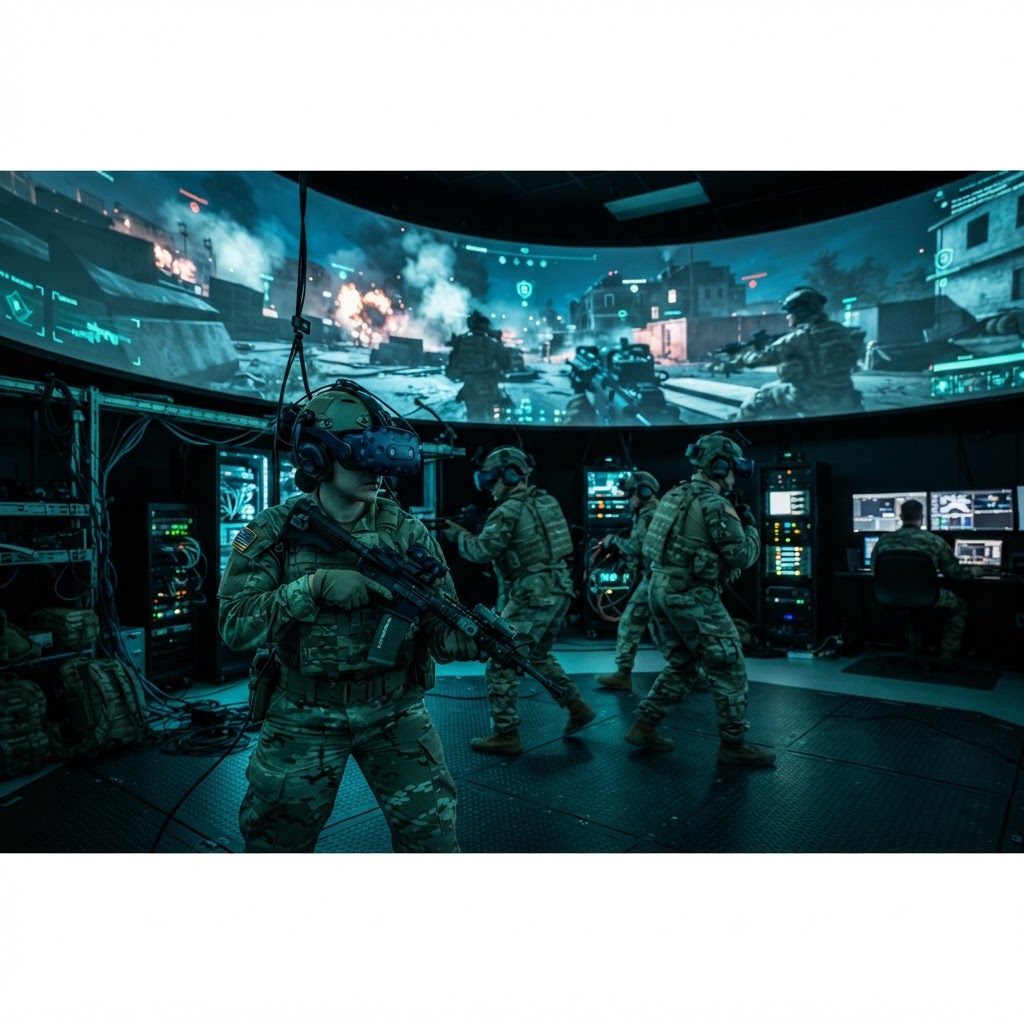
Enable immersive combat simulations, multi-user training exercises, and realistic mission rehearsal without safety risks or ammunition costs.
Why Now
Training Budget Crisis
$50K/soldier annually for ammunition and range time unsustainable
Range Availability
Training ranges booked months in advance, limiting readiness
Safety Concerns
Live-fire training accidents cause casualties and investigations
Technology Maturity
VR now photorealistic with <20ms latency for comfortable training
Proven Effectiveness
Studies show 90% retention vs 30% for traditional training
Environmental Pressure
Live-fire creates noise, pollution requiring expensive remediation
The Operational Challenge
High Training Costs
Live-fire exercises cost $50K+ per soldier annually for ammunition and range time
Limited Realism
Cannot safely replicate high-risk scenarios like urban combat and IED threats
Range Availability
Training ranges booked months in advance, limiting practice opportunities
Environmental Impact
Live-fire exercises create noise, pollution, and land use restrictions
No Performance Metrics
Subjective assessment of skills without quantitative data
Geographic Constraints
Cannot bring soldiers to specialized training centers regularly
The Private 5G Enabled Solution
Immersive Combat Simulations
Realistic VR environments replicate any terrain, weather, and threat scenarios
Multi-User Exercises
200+ soldiers train together in shared virtual battlespace
Weapons Simulation
Haptic feedback and realistic ballistics without live ammunition
Zero Latency
Edge rendering delivers <20ms motion-to-photon for comfortable VR
Performance Analytics
AI tracks accuracy, tactics, decision-making for objective assessment
Mission Rehearsal
Practice actual upcoming missions in virtual replica of target area
Technical Architecture
Performance Specifications
Cloud Rendering
High-fidelity graphics rendered at edge servers and streamed to lightweight headsets
Scenario Engine
Dynamic mission generation with AI-controlled enemy forces and civilians
After Action Review
Replay exercises from any perspective with performance heatmaps and statistics
Skills Database
Track individual and unit proficiency over time with competency milestones
Network Engineering Considerations
Ultra-Low Latency Rendering
<20ms motion-to-photon via edge servers for comfortable VR
Multi-User Coordination
200+ soldiers in shared virtual battlespace with synchronized actions
Cloud Rendering
High-fidelity graphics streamed to lightweight headsets
AI Scenario Engine
Dynamic mission generation with intelligent enemy forces
Performance Analytics
Track accuracy, tactics, decision-making for objective assessment
After Action Review
Replay exercises from any perspective with performance heatmaps
Measurable Business Impact
Operational Impact
- 5x more training repetitions possible
- 200+ soldiers train simultaneously
- 90% retention vs 30% traditional
- Zero safety incidents during training
Financial Impact
- $145M annual ammunition savings
- 80% lower range maintenance costs
- 60% reduction in training time
- Eliminated environmental remediation
Strategic Impact
- Mission-ready force proficiency
- Rapid deployment readiness
- Enhanced decision-making skills
- Competitive training advantage
Deployment Model
Content Development
Create training scenarios, terrains, and enemy AI behaviors
Pilot Company
Deploy to one unit to validate training effectiveness and adoption
Base Rollout
Scale to all units at installation with instructor training
Multi-Base Network
Enable distributed training with units at different locations
Sample ROI Snapshot
Financial analysis for brigade (5,000 personnel)
Current State
With Private 5G
3-Year Financial Projection
| Metric | Year 1 | Year 2 | Year 3 |
|---|---|---|---|
| Investment | ($25,000,000) | — | — |
| Annual Savings | $145,000,000 | $160,000,000 | $170,000,000 |
| Net Benefit | $120,000,000 | $160,000,000 | $170,000,000 |
| Cumulative | $120,000,000 | $280,000,000 | $450,000,000 |