City-Wide Connected Healthcare
with Private 5G
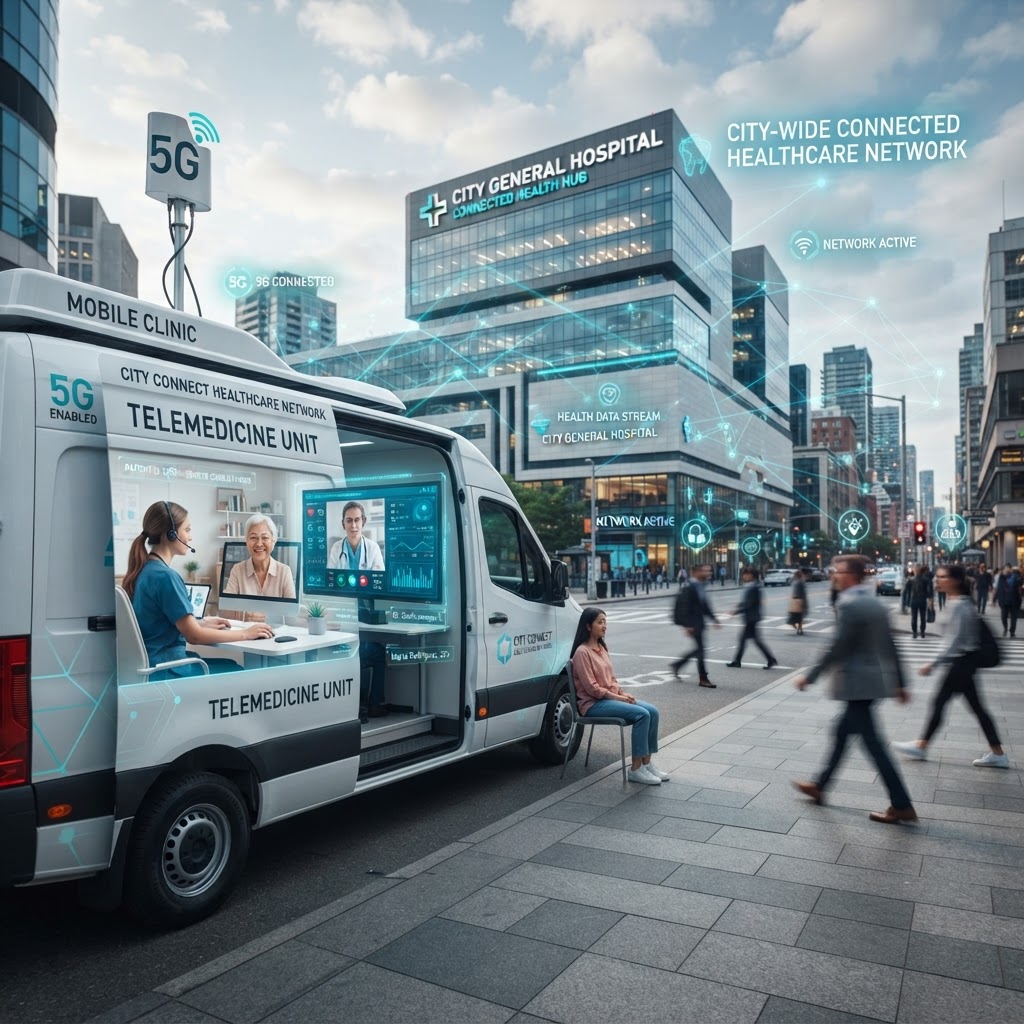
Enable integrated healthcare services, telemedicine access, and coordinated emergency response across the entire city.
Why Now
Access Crisis
Healthcare deserts leave millions without primary care access
ER Overload
Emergency departments overwhelmed with non-emergency cases
Chronic Disease Epidemic
Diabetes, heart disease require continuous remote monitoring
Cost Pressure
Cities face unsustainable healthcare spending growth
COVID Lessons
Pandemic revealed critical need for remote care infrastructure
Value-Based Care
Payment models shifting to outcomes, not volume
The Operational Challenge
Healthcare Access Gaps
Underserved neighborhoods lack access to primary care and specialists
ER Overcrowding
Non-emergency patients flood ERs due to lack of alternatives
Fragmented Systems
Hospitals, clinics, EMS operate independently without data sharing
Chronic Disease Management
No proactive monitoring of chronic patients between clinic visits
High Costs
Emergency care costs 10x more than preventive primary care
Poor Outcomes
Late diagnosis and treatment reduce survival rates for critical conditions
The Private 5G Enabled Solution
City-Wide Telemedicine
Community health centers provide virtual specialist consultations
Connected Ambulances
Pre-hospital care coordination with real-time data to hospitals
Remote Patient Monitoring
Chronic patients monitored at home with connected devices
Health Information Exchange
All providers access unified patient records across city
Mobile Clinics
5G-equipped vans bring healthcare to underserved areas
Public Health Surveillance
Real-time disease tracking and outbreak early warning
Technical Architecture
Performance Specifications
Unified HIE
All hospitals, clinics, ambulances share patient data via secure health information exchange
Telemedicine Platform
HIPAA-compliant video and data sharing for virtual consultations
RPM Integration
Home monitoring devices automatically upload vitals to care teams
Public Health Analytics
Anonymized data enables disease surveillance and intervention targeting
Network Engineering Considerations
High-Quality Video Streaming
4K telemedicine requires guaranteed bandwidth for all clinics
HIPAA Compliance
Private network ensures patient data never traverses public internet
Real-Time Data Sync
<100ms latency for EHR updates across all care sites
Massive Connectivity
Support 200+ clinics, mobile units, and home monitoring devices
Redundancy & Failover
Dual connectivity paths ensure zero downtime for life-critical care
Wide-Area Coverage
City-wide network reaches underserved neighborhoods
Measurable Business Impact
Operational Impact
- 50% improvement in health outcomes
- 200,000+ telemedicine visits annually
- 30% reduction in ER visits
- 100% provider connectivity
Financial Impact
- $125M healthcare cost reduction
- 65% lower ER utilization
- 40% reduction in hospital readmissions
- Improved population health
Strategic Impact
- Enhanced quality of life
- Healthcare equity advancement
- Foundation for precision public health
- Competitive city advantage
Deployment Model
HIE Platform
Deploy health information exchange connecting major hospitals
Telemedicine Clinics
Establish connected clinics in underserved neighborhoods
Ambulance Integration
Connect EMS fleet to hospital systems for pre-arrival coordination
Population Health
Enable RPM programs and public health surveillance
Sample ROI Snapshot
Financial analysis for city (750K population)
Current State
With Private 5G
3-Year Financial Projection
| Metric | Year 1 | Year 2 | Year 3 |
|---|---|---|---|
| Investment | ($35,000,000) | — | — |
| Annual Benefit | $125,000,000 | $155,000,000 | $180,000,000 |
| Net Benefit | $90,000,000 | $155,000,000 | $180,000,000 |
| Cumulative | $90,000,000 | $245,000,000 | $425,000,000 |