Smart Grid Revolution: Private 5G Powering Energy Infrastructure
How private 5G networks are transforming energy infrastructure, enabling real-time grid management, renewable integration, and predictive maintenance at scale.
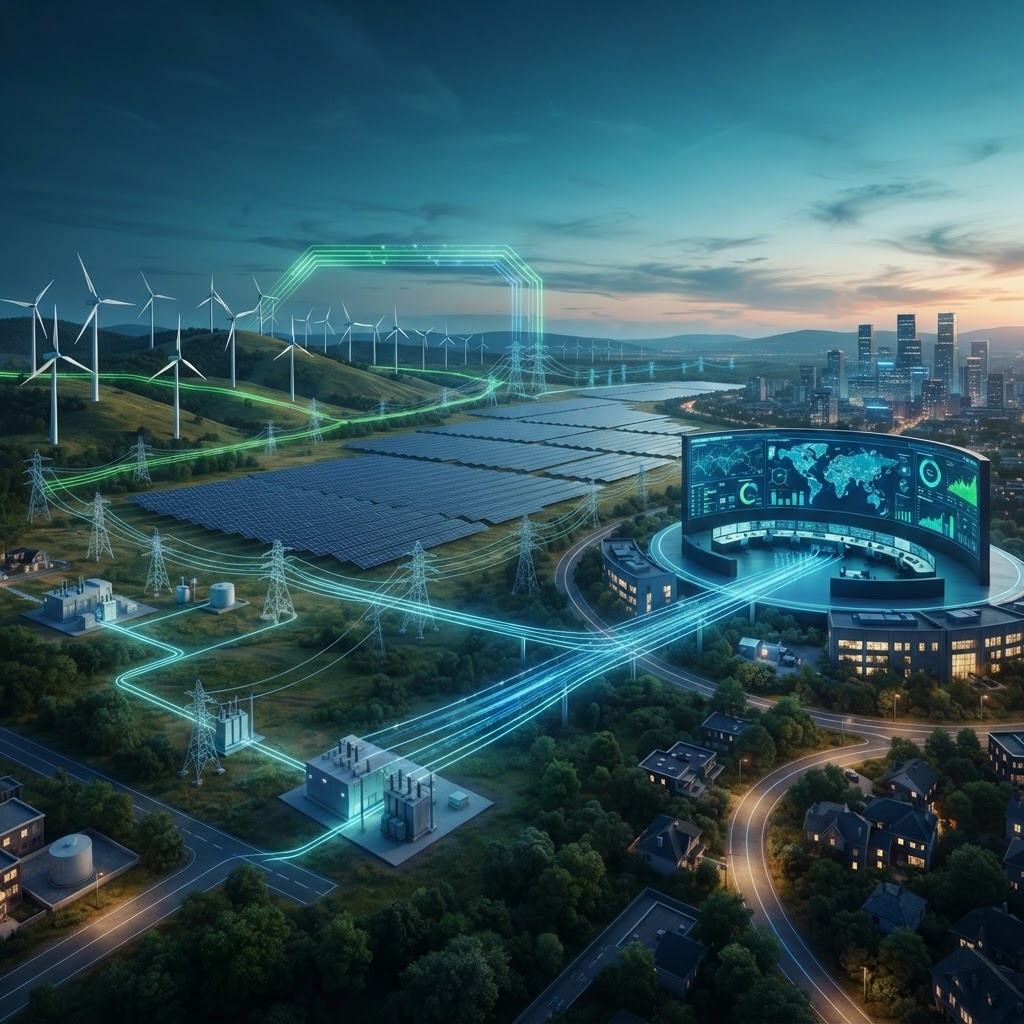
The Evolution of Energy Networks
Traditional power grids were designed for one-way power flow from centralized generation to consumers. Today's energy landscape demands bidirectional communication, distributed generation, renewable integration, and real-time monitoring — all of which require a robust, secure, and ultra-reliable communication infrastructure.
Why Private 5G for Smart Grids?
Private 5G networks offer unique advantages for utility companies:
- Ultra-Low Latency: Critical for real-time grid control and fault detection (sub-10ms response times)
- High Reliability: 99.999% uptime for mission-critical operations
- Massive IoT Connectivity: Support for millions of smart meters, sensors, and grid devices
- Network Slicing: Dedicated bandwidth for critical applications like SCADA systems
- Data Sovereignty: Complete control over sensitive operational data
- Coverage: Wide-area coverage across remote substations and distribution networks
Key Use Cases
1. Smart Metering & AMI
Advanced Metering Infrastructure (AMI) powered by 5G enables real-time energy consumption monitoring, dynamic pricing, demand response, and automated meter reading across millions of endpoints. This drives energy efficiency and enables consumers to make informed decisions about their usage.
2. Distribution Automation
Private 5G enables automated fault detection, isolation, and service restoration (FLISR). When a fault occurs, intelligent switches powered by 5G can isolate the problem area and reroute power within seconds, minimizing outage duration and improving grid resilience.
3. Renewable Energy Integration
Managing intermittent renewable sources like solar and wind requires real-time monitoring and control. 5G-connected inverters, battery storage systems, and forecasting algorithms work together to balance generation and demand, ensuring grid stability even with high renewable penetration.
4. Substation Automation
Digital substations equipped with 5G connectivity enable remote monitoring, predictive maintenance, and autonomous operations. High-definition video surveillance, thermal imaging, and IoT sensors provide comprehensive situational awareness for operators.
5. Field Workforce Enablement
Field technicians equipped with 5G-connected tablets and AR glasses can access real-time asset data, digital twins, and remote expert support, improving first-time fix rates and reducing mean time to repair (MTTR).
Security & Resilience
Energy infrastructure is a prime target for cyber threats. Private 5G networks provide enterprise-grade security with end-to-end encryption, network segmentation, and zero-trust architecture. Unlike public networks, utilities maintain complete control over their communication infrastructure, reducing attack surfaces and ensuring compliance with critical infrastructure protection standards.
The Path Forward
As energy systems become more distributed, complex, and digitalized, private 5G networks will serve as the nervous system of the smart grid. Early adopters are already seeing benefits: reduced operational costs, improved reliability, faster fault response, and better integration of distributed energy resources.
The question for utilities is not whether to adopt private 5G, but how quickly they can deploy it to stay competitive in an increasingly digital energy landscape.
Written by
Vortenix Technology Team