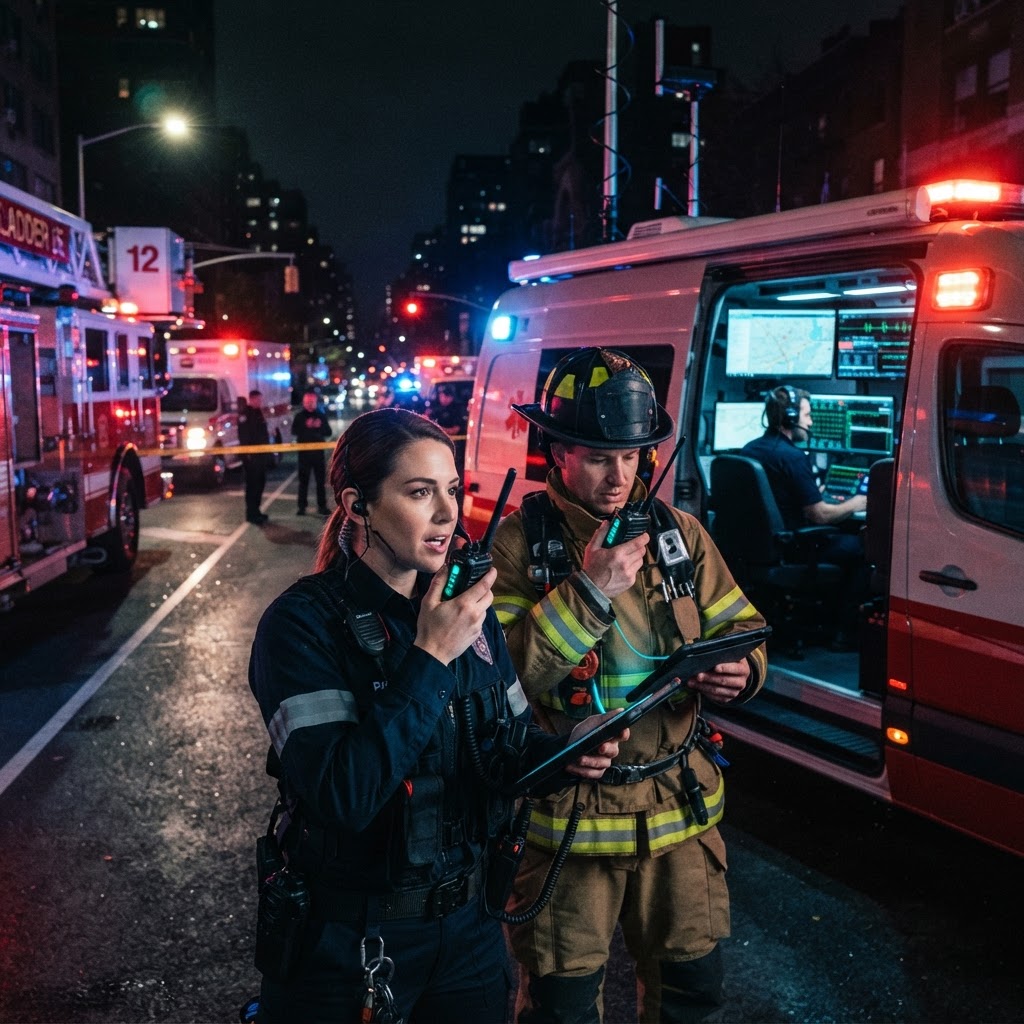
When Every Second Counts
In emergency situations, communication failures cost lives. First responders—police, fire, EMS, and emergency management—need communications that work absolutely, reliably, every time. No dropped calls. No network congestion. No coverage gaps. Mission-critical communications technology provides this level of reliability, and Private 5G is revolutionizing what's possible.
What Makes Communications "Mission-Critical"?
Mission-critical communications have requirements far beyond consumer mobile networks: 99.999% reliability (less than 5 minutes downtime per year), priority and preemption ensuring emergency calls never fail, dedicated infrastructure independent of public networks, end-to-end encryption for security, push-to-talk (PTT) for instant group communication, and seamless handoff as responders move between areas.
Legacy Systems and Their Limitations
Land Mobile Radio (LMR)
For decades, public safety has relied on LMR systems like P25 and TETRA. These provide reliable voice communications with wide coverage and proven technology. However, they're limited to voice and basic data, lack multimedia capabilities, use aging infrastructure with high maintenance costs, and have limited capacity for data-intensive applications.
Commercial Cellular Networks
Public cellular networks offer high-speed data and broad coverage but fail mission-critical requirements. During emergencies when everyone calls simultaneously, networks congest. First responders can't get through. Public networks also lack priority access, dedicated spectrum, and the security controls public safety requires.
Private 5G: The Mission-Critical Solution
Private 5G networks designed for public safety combine the best of both worlds: the reliability and security of dedicated infrastructure with the capabilities of modern broadband technology.
MCPTT: Mission-Critical Push-to-Talk
MCPTT brings instant, one-to-many voice communications to broadband networks. Press a button, talk to your team—just like traditional radios but with enhanced features: group calls with priority levels, emergency alert buttons, location sharing, multimedia attachments, and interoperability between agencies.
Multimedia Capabilities
Beyond voice, Private 5G enables real-time video streaming from body cameras and drones, sharing photos from incident scenes, streaming building plans and hazmat data, coordinating via real-time situational awareness dashboards, and transmitting patient vitals from ambulances to hospitals.
Network Slicing for Priority Services
5G's network slicing creates virtual networks within physical infrastructure. Emergency voice calls get absolute priority and guaranteed bandwidth. Video and data services get dedicated resources. Routine administrative traffic uses remaining capacity. This ensures critical communications never suffer interference.
Real-World Applications
Fire Service
Firefighters entering burning buildings carry connected sensors measuring heat, air quality, and structural stress. Command centers monitor firefighter locations in real-time. Drones provide thermal imaging from above. Building information systems deliver floor plans and hazard data instantly.
Law Enforcement
Officers access criminal databases, facial recognition, and license plate readers from their vehicles. Body cameras stream evidence in real-time. Tactical teams coordinate using live video and shared location data. Command centers orchestrate multi-agency responses with unified communications.
Emergency Medical Services
Paramedics transmit patient vitals, ECG data, and video to emergency rooms before arrival. Doctors provide remote guidance during complex procedures. Connected defibrillators and medical devices improve patient outcomes through real-time monitoring and expert consultation.
Deployment Models
Public safety agencies deploy Private 5G in various configurations: dedicated networks with full control and independence, hybrid systems combining LMR and 5G, shared regional networks serving multiple agencies, and mobile/deployable systems for special events or disasters.
Security and Resilience
Mission-critical networks must resist cyber threats and physical damage. Private 5G implementations include end-to-end encryption, zero-trust security architecture, physical network hardening, redundant systems and failovers, and backup power ensuring operation during grid failures.
The Path Forward
As Public safety agencies worldwide are transitioning from legacy systems to mission-critical broadband. FirstNet in the US, ESN in the UK, and similar initiatives globally demonstrate this shift. Early adopters report faster emergency response, better inter-agency coordination, enhanced officer safety, and improved public outcomes.
Private 5G isn't just an upgrade—it's a fundamental transformation in how first responders communicate, coordinate, and save lives. As technology matures and deployments expand, mission-critical communications will continue evolving, enabling capabilities we're only beginning to imagine.
By Badrinath Kodandarama