Private 5G in Healthcare: Enabling Connected Hospitals & Telemedicine
How private 5G networks transform healthcare delivery through telemedicine, remote surgery, AI diagnostics, and intelligent hospital operations while ensuring patient data privacy.
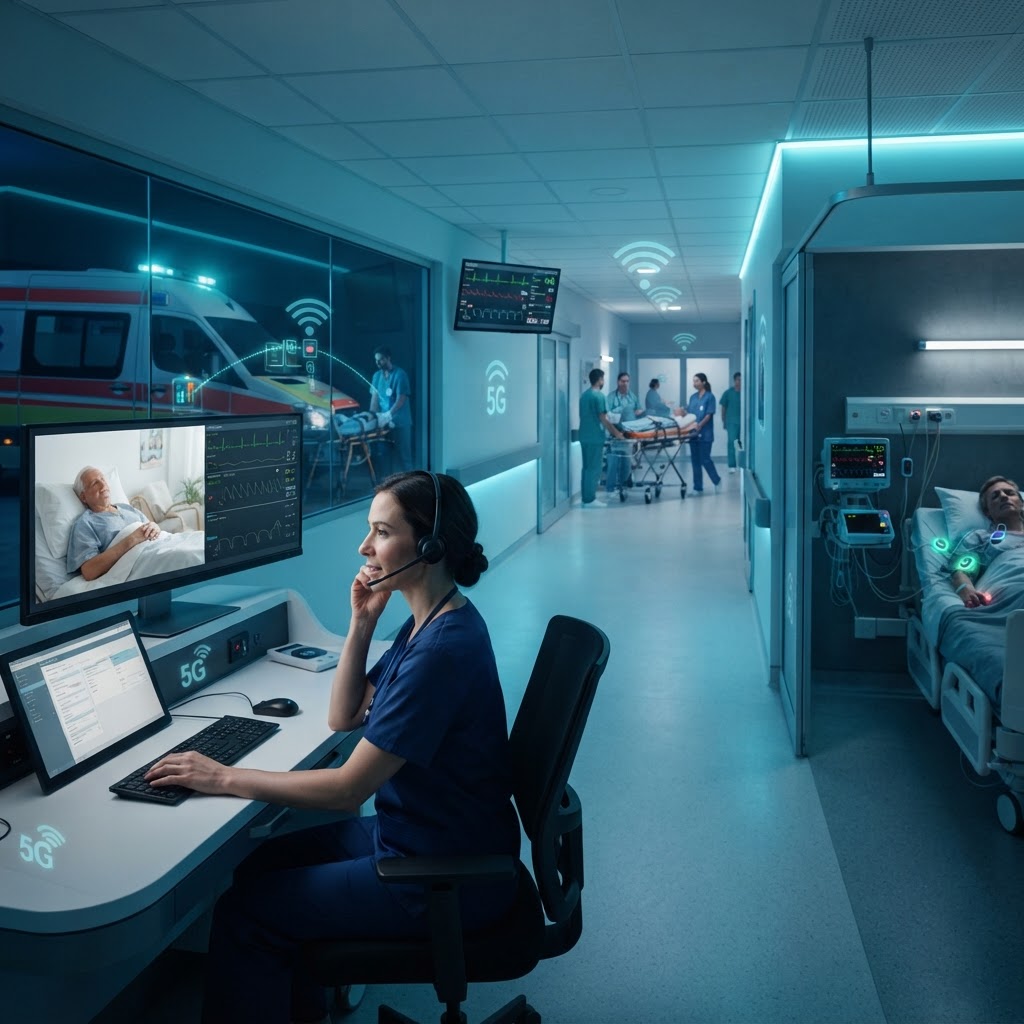
The Healthcare Connectivity Imperative
Modern healthcare demands instant access to patient data, real-time collaboration between specialists, and continuous monitoring of vital signs. From emergency departments to operating rooms, connectivity is no longer optional — it's life-critical. Private 5G networks provide the reliability, security, and performance healthcare organizations need.
Why Private 5G for Healthcare?
- Ultra-Reliability: 99.999% uptime for mission-critical medical applications
- Low Latency: Real-time response for remote surgery and emergency care
- Data Privacy: Complete control over sensitive patient data and HIPAA compliance
- Massive IoT: Connectivity for thousands of medical devices and sensors
- Network Slicing: Guaranteed bandwidth for surgical robotics vs. general hospital operations
- Seamless Coverage: Connectivity throughout hospital buildings, campuses, and ambulances
Transformative Use Cases
1. Telemedicine & Remote Consultations
Private 5G enables high-quality video consultations between patients and specialists regardless of location. Patients in rural areas access world-class expertise, while emergency room physicians consult with neurologists or cardiologists in real-time. Low-latency connectivity ensures natural conversations without delays or interruptions.
2. Remote Surgery & Robotic Assistance
Surgeons operate robotic surgical systems remotely with haptic feedback and sub-10ms latency. Expert surgeons in major cities perform procedures in remote hospitals, democratizing access to specialized care. AI-assisted surgical systems provide real-time guidance, highlighting anatomical structures and suggesting optimal approaches.
3. Continuous Patient Monitoring
Wearable sensors and smart beds continuously monitor patient vital signs, transmitting data via 5G to centralized monitoring systems. AI algorithms detect early warning signs of deterioration, alerting clinicians before conditions become critical. This proactive approach reduces code blue events and improves patient outcomes.
4. AI-Powered Diagnostics
Medical imaging equipment transmits high-resolution scans via 5G to AI analysis systems. Radiologists receive AI-highlighted areas of concern, improving diagnostic accuracy and speed. Edge computing processes images locally for immediate preliminary results, while cloud-based deep learning models provide detailed analysis.
5. Connected Ambulances
5G-connected ambulances transmit patient vital signs, ECGs, and video feeds to emergency departments during transport. Physicians provide real-time guidance to paramedics and prepare for patient arrival, reducing door-to-treatment times for strokes, heart attacks, and trauma cases where every second matters.
6. Smart Hospital Operations
IoT sensors track medical equipment, medications, and supplies throughout hospitals. RTLS (Real-Time Location Systems) ensure critical equipment is available when needed. Automated inventory systems trigger reorders before stockouts occur, while environmental sensors monitor temperature, humidity, and air quality in operating rooms and storage areas.
Enhanced Clinical Workflows
Mobile Electronic Health Records
Clinicians access complete patient records, lab results, and imaging studies on tablets and smartphones as they move through the hospital. Voice-to-text documentation powered by AI reduces administrative burden, allowing physicians to spend more time with patients.
AR/VR for Medical Training
Medical students and residents practice procedures in immersive VR simulations before working with real patients. AR overlays provide real-time guidance during procedures, displaying patient anatomy, surgical plans, and vital signs directly in the surgeon's field of view.
Security & Privacy
Healthcare data requires the highest levels of security. Private 5G networks provide end-to-end encryption, network segmentation, and complete data sovereignty. Unlike public networks, hospitals maintain full control over their infrastructure, ensuring HIPAA compliance and protecting sensitive patient information from cyber threats.
Network slicing creates isolated virtual networks for different functions — one slice for medical devices, another for administrative systems, and another for guest Wi-Fi — preventing cross-contamination and limiting attack surfaces.
Disaster Response & Mass Casualty Events
During disasters, private 5G networks provide reliable communication when public infrastructure fails. Mobile 5G units can be deployed to disaster sites, creating temporary networks for field hospitals, triage areas, and coordination centers. Real-time communication between field teams and hospital emergency departments ensures efficient resource allocation and patient care.
Clinical Outcomes & Business Impact
Healthcare organizations deploying private 5G report:
- Improved patient outcomes through early intervention and continuous monitoring
- 15-25% reduction in equipment search time through RTLS
- Faster diagnosis and treatment through AI-assisted imaging
- Reduced readmissions through remote patient monitoring post-discharge
- Expanded access to specialized care through telemedicine
- Enhanced clinician satisfaction through streamlined workflows
The Future of Connected Healthcare
As healthcare becomes increasingly digital and data-driven, private 5G networks will serve as the foundation for smart hospitals, telemedicine, and personalized care. The technology exists today — forward-thinking healthcare organizations are deploying it to improve patient outcomes, operational efficiency, and care quality.
Written by
Vortenix Technology Team